Integration use cases
Write POS and ecommerce records into SQL Accounting or AutoCount
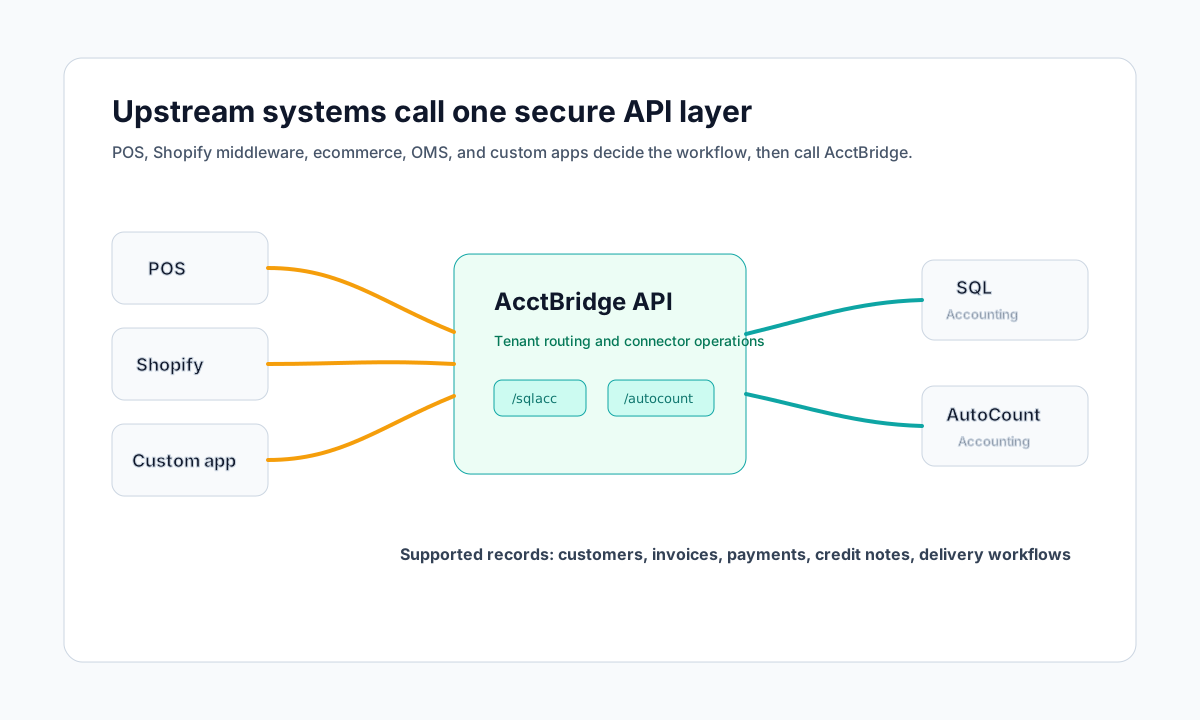
Use AcctBridge as the API layer for POS, Shopify middleware, ecommerce, OMS, or custom apps that need to write supported accounting records into SQL Accounting or AutoCount.
Why this matters
AcctBridge is useful when another system already knows what business event happened and only needs a secure, repeatable way to write the supported accounting record.
That upstream system might be a shop POS, Shopify middleware, ecommerce platform, order management system, marketplace connector, or internal application.
The upstream system owns the workflow timing
A POS system can decide when end-of-day sales are ready. Shopify middleware can decide how orders map to customers, invoices, payments, or delivery workflows. A custom OMS can decide which accounting connection receives which document.
AcctBridge does not replace that business mapping layer. It gives that layer documented SQL Accounting and AutoCount API endpoints with routing and connector operations already handled.
Examples of supported write-oriented workflows
The exact endpoint depends on the selected accounting platform and the supported connector surface. The important pattern is consistent: your software calls the gateway endpoint, and AcctBridge routes the request to the right local connector.
- Create or update supported customer/debtor records before posting sales.
- Create supported invoices, payments, credit note knock-offs, or delivery workflows.
- Keep POS, ecommerce, and OMS code away from direct accounting network access.
A better boundary than direct database access
Direct database writes can be fast to prototype but are hard to support safely across accounting environments. A documented API boundary is easier to test, authorize, monitor, and repeat.
AcctBridge keeps the access boundary stable while your integration team focuses on the mapping rules that make sense for each customer workflow.